









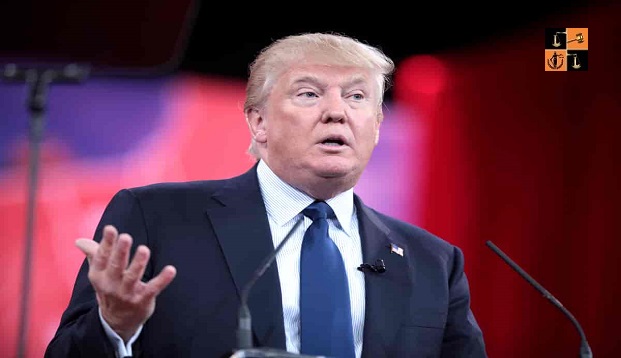
Recently, a significant legal challenge to the Donald Trump administration’s immigration policy culminated in a major ruling from a United States federal court, which closely examined the legality of a $100,000 supplemental fee imposed on new H-1B visa petitions. The dispute centred on whether the President could use immigration powers under federal law to impose what challengers described as a massive financial burden on employers seeking skilled foreign workers. While the administration defended the measure as necessary to protect American interests and prevent misuse of the H-1B programme, the Court was called upon to determine whether the policy crossed constitutional and statutory limits.
The controversy began when President Donald Trump signed Proclamation 10973 in September, 2025, requiring employers filing new H-1B petitions to pay an additional $100,000 fee. Before the proclamation, H-1B filing fees ranged between $960 and $7,595, making the new charge a dramatic increase. Twenty States challenged the policy, arguing that it would severely affect their ability to recruit foreign professionals in sectors such as education, healthcare and public universities. They contended that the fee would make the H-1B route unaffordable for many institutions and businesses that rely on skilled international workers. The administration, however, maintained that the measure was a valid exercise of presidential authority under the Immigration and Nationality Act to regulate the entry of non-citizens into the United States.
Judge Leo T. Sorokin of the United States District Court for the District of Massachusetts found that the central question was whether the $100,000 payment constituted a permissible immigration restriction or an unauthorised tax. The Court concluded that the measure functioned as a tax rather than a penalty, observing, “Here, the substance and application of the $100,000 payment reveal that it is a tax, regardless of what the payment is called.” The Court further held that Congress had not delegated taxing authority to the President under the Immigration and Nationality Act, noting that the statute authorises restrictions, rules, regulations, orders, limitations and exceptions, but not taxation. It also found that the agencies implementing the policy violated the Administrative Procedure Act by introducing new legal obligations without notice-and-comment rulemaking and failed to adequately consider alternatives and exemptions.
Consequently, the Court set aside the policy in its entirety.
Picture Source :



















